
Latest courses

3-tag:Courses-65px

Tuesday, September 8, 2026

The Battles We Fight

A few weeks ago, as I sat in the nail salon while waiting for my wife to get her pedicure, I had an epiphany.

The people who owned the Nail Salon were in deep chatter in their native tongue.

As I tried to figure out which language they were speaking and looked around the shop for clues, I realized they were all Vietnamese; I immediately thought about the battles we’ve fought and are still fighting.

For me, it was a humbling experience, as I wore my military hat that stated I was a Gulf War Veteran.

Although I didn’t serve in Vietnam, my father did, and I came in just as the war was ending.

I often wonder what other nationalities think of Americans.

We have many foreigners who have prospered and broken the code to success.

However, in that moment of all the chatter that was going on back and forth subconsciously, I was thinking it had not been that long ago since the Vietnam War ended.

I know some are unaware of when the Vietnam War ended, which was on April 30, 1975.  I had already joined the military in June 1974.

I was able to hear some of the war stories as a new recruit and witness the things we don’t talk about today.

Vietnam War | Facts, Summary, Years, Timeline, Casualties, Combatants, & Facts | Britannica

However, I have come to realize that many are still reliving the Civil War that ended in 1865 with the surrender of the Confederate Army.

When and How Did The American Civil War End? | History Hit

Bing Videos

I’m somewhat reminded of the words Abraham Lincoln said to Ulysses S. Grant that are still happening today: “Politicians, not Generals, will set the terms of peace.

As we look at a nation that remains divided, “The battles we’ve fought” are still being fought.

Understanding it’s football season, we even have a Blue and Grey Bowl.

The Blue-Grey All-American Bowl took place at the Tampa Bay Buccaneers’ Raymond James Stadium last year on January 27, 2025, and was broadcast on ESPN’s family of networks

This year, the Blue-Grey All-American Bowl is in Dallas, Texas, on December 21, 2026, at the Dallas Cowboys’ AT&T Stadium (TX).

All-American Bowl Schedule – Blue-Grey Football High School All-American Football Games and Combines

Even at our youth level, today’s players are being prepped for the battles ahead as they prepare for scouts and college football.

Ironically, various schools will not teach anything about Critical Race Theory (CRT), yet the students are learning about it on the football fields.

Many understand the consequences of teaching CRT and remain focused on securing school funding, a measure introduced by the state legislature under the current administration.

Trump Signs Orders to Defund Schools Teaching CRT and Promote School Choice | NTD

In a few weeks, I plan to be in the presence of a Medal of Honor recipient.  Major James Capers Jr., as I prepare to attend my second Military Influencer Conference this year in Tampa, Florida.

James Capers Jr | Vietnam War | U.S. Marine Corps | Medal of Honor Recipient

I met Major Capers last year at the 2025 Military Influencer Conference, during the MIC-MIGHTY 25 Gala in Atlanta, Georgia.

So, when you think about “The battles we’ve fought,” just know they are continuous if we want them to be.

“Soldiers generally win battles; Generals get credit for them.” ~ Napoleon Bonaparte

“Part of the happiness of life consists not in fighting battles, but in avoiding them. A masterly retreat is in itself a victory.”  ~ Norman Vincent Peale

Today, I challenge you to reflect on the battles you’ve fought.  The question is, are you still fighting them?

Blog source: https://mckinleysthoughts.com/the-battles-we-fight/

Thursday, September 3, 2026

Huntsville, AL Businesses: Book a Motivational Speaker Who Actually Knows Your Industry

Huntsville's business community is different from a lot of mid-size cities. It's anchored by aerospace, defense, and a fast-growing tech sector, and that changes what actually works on a stage in front of your team. Generic motivational content lands flat here. Here's what to look for instead, and how to avoid booking the wrong fit for your event.

A speaker who's worked with engineering-heavy, technically-minded audiences understands that Huntsville teams respond better to concrete frameworks than abstract inspiration. Someone unfamiliar with the region's pace and culture often defaults to a generic keynote that could be delivered anywhere, and it shows within the first few minutes. Local familiarity isn't a nice-to-have; it's the difference between a talk that resonates and one that's forgotten by the following week.

What Should You Look for When Comparing Motivational Speakers in Huntsville, AL?

When comparing motivational speakers in Huntsville, AL, look past the highlight reel and ask about substance: does the speaker offer a specific, teachable framework, or just an hour of high energy with no follow-through? Ask for examples of past corporate audiences similar to yours, and request a full clip from a live event rather than a polished sizzle reel that only shows the best thirty seconds. A speaker with real leadership experience, not just stage experience, tends to bring content that holds up under scrutiny from a technically-minded audience used to asking hard questions.

How Much Does It Cost to Book a Motivational Speaker in Huntsville, AL?

Pricing varies widely based on event length, audience size, and whether the engagement is a single keynote or a full workshop day built around hands-on practice. Ask for a clear breakdown that includes travel, any materials, and follow-up resources, rather than a single flat number, since hidden costs are the most common source of budget surprises after booking. Local speakers based in the Huntsville and Madison area often reduce travel costs considerably compared to a national bureau flying someone in from out of state.

What Questions Should You Ask Before Booking?

Before committing, ask what the speaker's core message is in a single sentence. If they can't summarize it clearly, your audience likely won't either, no matter how much energy they bring to the room. Ask how they customize content for different industries, what their typical audience size looks like, and what happens if you need to reschedule close to the event date. A speaker who answers these directly, without vague marketing language, is usually the safer bet for a corporate budget.

How Far in Advance Should You Book a Motivational Speaker for a Huntsville Event?

Most experienced motivational speakers in Huntsville, AL get booked out several weeks to a few months ahead, especially around common event seasons like Q1 kickoffs and year-end conferences. Reaching out early gives you more flexibility on date and format, and gives the speaker enough time to properly tailor the session to your team rather than reusing a generic deck on short notice because nothing else was available.

What Makes a Local Speaker Different From a National Speaker Bureau?

A national bureau matches you with whoever's available and fits your budget, often someone who has never set foot in Alabama and has no reason to understand its business culture. A local speaker brings firsthand understanding of the Tennessee Valley business community, from Huntsville's aerospace and technology sector to the region's broader corporate base, and can build that context directly into the session rather than bolting on a few local references at the last minute.

The right fit isn't necessarily the most famous name, it's the speaker whose experience and delivery actually match your team and your goals. Take the time to compare a couple of options directly, ask the questions above, and trust the answers more than the promotional copy.

Frequently Asked Questions

How much does it cost to hire a motivational speaker? Costs vary based on event length, audience size, and travel requirements. Ask for an itemized quote rather than a flat number so you know exactly what's included before you commit to a budget.

What's the difference between a motivational speaker and a keynote speaker? "Keynote speaker" describes the speaking slot itself, while "motivational speaker" describes the content style. A keynote can be motivational, educational, or industry-specific depending on who's delivering it and what the event calls for.

How do I find a motivational speaker for my company? Start with your event's specific goal, then look for speakers with relevant industry experience and verifiable audience feedback, rather than choosing based on name recognition alone.

How long should a motivational speaker talk? Most corporate keynotes run thirty to sixty minutes, though workshop-style sessions can run several hours depending on how hands-on the content is and how much practice time is built in.

Wednesday, September 2, 2026

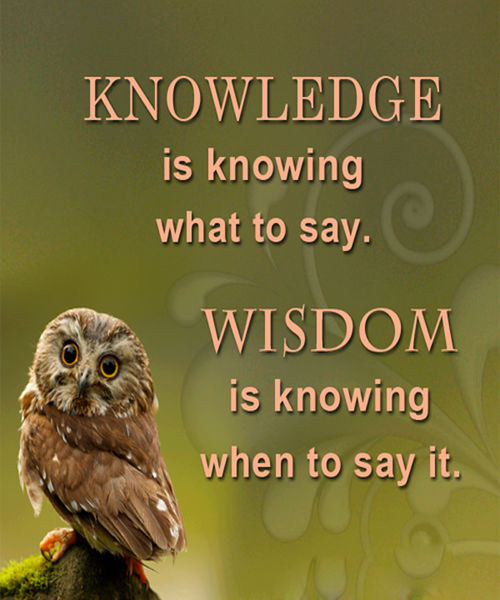
Knowledge and Wisdom

I have written about wisdom before; however, the question is: what do knowledge and wisdom mean to you?

Today, with the introduction of Artificial Intelligence (AI) becoming more prevalent, what does wisdom mean to you?

What is each one of us doing to increase it and learn from the wisdom of others?

Some of it is a knowledge transfer to our youth for those who want to listen.

Some of it is being poured into by others attending conferences and learning new things we did not know.

For all practical purposes, let’s use the word metacognition.  Merriam-Webster defines it as “The awareness or analysis of one’s own learning or thinking processes.”

METACOGNITION Definition & Meaning – Merriam-Webster

As a lifelong learner, I’m still working every day to acquire new information I was either numb to or didn’t know existed.

We are all an open book.  “When we live our life as if it is an open book, we are free in body, mind, and spirit and allow anyone to read from our pages.” — Unknown

I remember hearing a homily about being a “Living Letter.”

It’s something that I strive to be as I share my knowledge and wisdom with others.

2 Corinthians 4: Living Letters | Ken Boa Reflections

Part of what I have learned over the last three years is a deeper understanding of both my faith and the wisdom packed within the Bible.

I don’t profess to be a Bible scholar by any means; however, what I know today is light-years ahead of what I knew three years ago.

Sometimes we must be intentional in learning more, and that is what I have done over the last three years.

If you have ever read “The Four Agreements by Miguel Ruiz and Janet Mills,” it’s this wisdom that I continue to learn and dream from as I search for new knowledge and wisdom.

Many of us discriminate against what we want to learn and dream about, or against what we perceive as worth knowing.

Although my parents are no longer on this earth, the life lessons they imparted to me are and remain a powerful insight into who I am today.

It’s that wisdom and knowledge that make me who I am.

Each of us has the freedom to learn once we leave the house as we strike out in our adult lives.

To me, there is so much we can learn from the wisdom that is yet unknown or untapped.

Years ago, I converted to Catholicism and found myself with the wisdom to understand the word “judgment”.

It’s within the specific word that I found out about the poison we put on others and ourselves.

It’s poison when we judge others and feel the need to judge them.

Today, the wisdom and knowledge of understanding that being a living letter is not about judging others and reading have helped take my wisdom to another level.

My question to you is: how has your search for knowledge and wisdom turned out, and what does it mean to you?

I’m well aware that each of us has blind spots we can’t see, yet what do others see in you when they ask for your opinion on something?

I’ll close with a specific reminder that stays with me when I’m attending any social or conference event and talking with people for the first time.

It’s having the wisdom to speak on any topic, or at least to know something about it, as a sign of being well-read.

Although I don’t profess to be a know-it-all, growing up, some adults would tell me, “I’ve forgotten more than you know,” which was a driving factor in learning more than the person I was speaking to.

When I hear those words, it’s a reminder that there is more to learn.

Marcus Aurelius consistently stressed virtues like self-control, patience, fortitude, and wisdom.

“Knowledge alone is not power; it becomes power only when applied effectively through action, judgment, and influence.”

Knowledge Is Not Power | Conversational Leadership

Today, I challenge you to consider what knowledge and wisdom mean to you. Are you passing it on to the next generation, or are you just living and allowing your wisdom to shrink or atrophy?

Blog source: https://mckinleysthoughts.com/knowledge-and-wisdom/

Monday, August 31, 2026

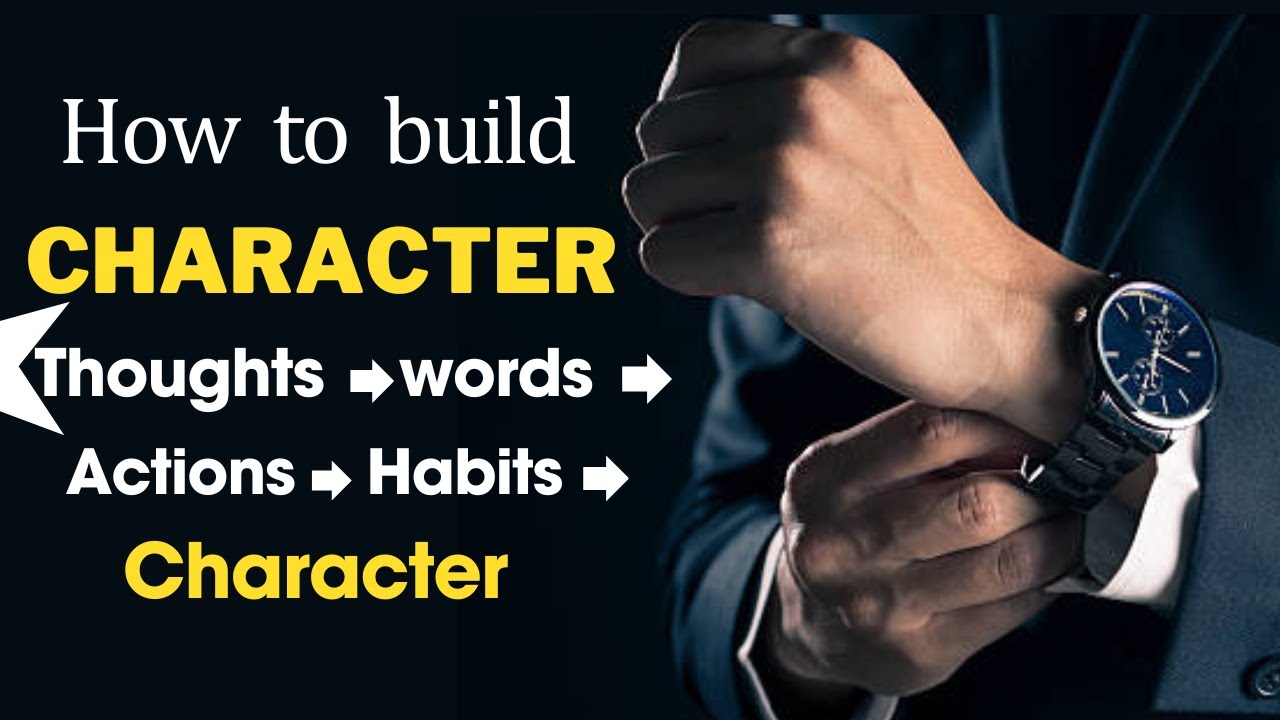
Building Character

Today, please take a moment and think about all the people you know who are risk-takers.

We see them all the time in our daily lives; just like the person I saw this past week running a red light when the light was solid red while the green light was moving traffic in another direction.

Every day, we see wrecker service trucks picking up wrecked cars on our streets and highways.

In some of these wrecks, given the direction the vehicle was traveling, I must wonder how the car managed to cross the street or move through traffic.

Just this week, I witnessed a motorcycle rider weaving through traffic, putting himself at risk by crossing in front of an 18-wheeler.

I continue to see people texting while driving, which is distracting.

At times, I see muscle cars showing off, saying, “Look at me.”

Ironically, I was in Walgreens when I heard a young man on the phone talking about getting a ticket after just finishing a driver’s course.  When I walked out, he was pulling off in his Mustang, which somewhat explains his dilemma.

Sometimes the cars we drive can be magnets for tickets; however, it doesn’t always have to be.

Granted, every day we take chances and must always be cognizant of our surroundings when we leave our homes.

It doesn’t always have to be with traffic, as I’m leery of the foods I eat and what they do to my digestive system.

I’ve learned that the older we get, the more we must eat the right foods.

Over the years, I’m reminded of my resiliency training and the importance of leaving early so I don’t have to rush to my appointments.

Therefore, today, what is it that makes us take risks?

Do you see yourself as a risk-taker or someone who prefers to err on the side of caution and avoid taking risks?

Years ago, I learned the word “Timorous” while facing my fear of jumping out of airplanes in the military.  I was injured during a high-altitude entanglement and returned to jump status a few years later.

TIMOROUS Definition & Meaning – Merriam-Webster

However, I’m not advocating that you do what I’ve done, because there is a process of adjusting our mindset to do anything we put our minds to.

Back then, we called it “building character” whenever we jumped out of an airplane or a helicopter.

What I am advocating is that the character we build is important.

For me, it is almost in the same category as hearing the words “No risk, no rewards.”

Plainly stated, “No risk, no rewards” means you must take chances or step outside your comfort zone to achieve meaningful gains, success, or growth.

Many of us have stepped outside our comfort zones in training for 10K runs or marathons.

I’ve only run three marathons in my life, and that was enough.

Even the squirrel we see in our backyards is taking a risk when it leaves the nest.

I saw one on the road the other day trying to cross the street and then turn back.

We are sometimes like squirrels, turning back to avoid the traffic.

On the other hand, we see those who like, or feel the need to, show off when we have a fast car.

Which is not how to build character.

We don’t need to run red lights if we plan and arrive 10 minutes early for our appointments.

We do not need to risk weaving in and out of traffic, putting other people in danger.

As we look at the people around us, we can surmise, or at least tell from their character, the type of person they are.

Not to judge; however, when I see a person who is “Timorous” and has never served in combat or the military, that person is not who I want watching my back if I’m stranded alone on an island.

Each of us has built a specific amount of character that is on display every day.

We hear it in the language people use and how they stand.

Although you may be timid, careful, or reluctant to go into combat or jump out of a perfectly good airplane, are you one who takes risks at the cost of others?

I’m not naïve; I know that sometimes worldly attributes can cloud our judgment.

Today is about having the proper character on display so that others see the good in you!

One of my favorite quotes is by Dr. Martin Luther King Jr.

“The ultimate measure of a man is not where he stands in moments of comfort and convenience, but where he stands at times of challenge and controversy.”

Measure of a Man, The | The Martin Luther King, Jr. Research and Education Institute

Today, I challenge you to do a pulse check.  What are you being measured on each day as you live your life?  When was the last time you looked at your character?

Blog source: https://mckinleysthoughts.com/building-character/

Thursday, August 20, 2026

Introspection

Have you ever wondered why woodpeckers don’t get headaches?

I heard something interesting this week that caught my attention, and I decided to write about it.

Before I get too deep, I believe you need to know the answer to that question.

Why Don’t Woodpeckers Get Headaches? | Ask A Biologist

Today, I’m blessed to know I rarely have headaches.

Even in those moments of giving up coffee for Lent.

I’m aware that some are not as fortunate as I am, as today we live in a society where so many people are affected by migraine headaches.

We visit our doctors for appointments, and they ask, “What are you allergic to?”

So today is about introspection.

INTROSPECTION Definition & Meaning – Merriam-Webster

When was the last time you took time to reflect, looking inward by examining your thoughts and feelings?

It was a reminder to me when I heard the woodpecker question, as something I had never thought about before I heard it.

There are things we take for granted: that the tree will bloom again after the hard winter’s weather and flowers will spring forward at just the right time.

We are all uniquely and wonderfully made, with various qualities and tolerances.

As a lifelong learner, I am fascinated by the prospect of learning something new.

This past Wednesday, at one of my Toastmasters meetings (Professional Speakers), Sara Ivie, DTM, told a story about the people of Gander who sheltered over 6,500 people during 9/11. It was a story I had never heard before, and it led me to greater introspection.

We all know what happened on September 11, 2001, when al-Qaeda terrorists hijacked four planes, crashing two into the World Trade Center, one into the Pentagon, and one in Pennsylvania, killing nearly 3,000 people and triggering the U.S. “War on Terror.”

But what I didn’t know, or had forgotten, was how long the airspace was shut down and the exact locations where planes were redirected or diverted to land.

How Gander, Newfoundland Took In 6,500 People On 9/11

“There were roughly 4,500 planes in the air at the time, and 38 of them landed in the rural Canadian town of Gander, according to the 9/11 Memorial and Museum.”

It’s a story of hospitality that is so much needed in our current history today.

The Canadian town of Gander is still remembering its efforts as it recently celebrated the 25th Anniversary of 9/11.

Town of Gander to Mark 25th anniversary of 9/11  – NTV: Newfoundland and Labrador’s Most Trusted News Source

Nowadays, everyone has something to say; however, it’s up to us to listen and reflect on what they say.

Many iconic figures have addressed this theme directly or indirectly. Here are some notable ones:

“The only thing worse than being talked about is not being talked about.” — Oscar Wilde (reflecting on the inevitability of opinions)

“People always have something to say, but rarely do they say it with kindness.” — Maya Angelou (emphasizing compassion in discourse)

“Everyone has an opinion, and they’re usually wrong.” — Mark Twain (a humorous take on human judgment)

Today, I challenge you to reflect on what has caught your attention this week and prompted introspection as you search for answers.

Blog source: https://mckinleysthoughts.com/introspection/

Thursday, August 13, 2026

Subliminal Messages

This week, something caught my attention while watching television.

It was more negative advice from a political point of view.

We all have various words we have learned over time that we know exactly who’s saying them when we hear them.

One is “Drain the Swamp” commercials.

I often wonder what people are thinking or feeling when they hear that word and what their reactions might be if they understand politics.

To me, it’s just like someone saying the “N” Word.

When I hear it from someone not from my race, then I know the context behind their words.

I don’t like it, especially if I know the context behind it.

When we hear the word “Woke,” we have to decide and know who’s saying it and what they are conveying to us.

As much as I try to stay neutral or non-partisan, something seems to trigger an uncomfortable feeling that Rodney King would say.  “Can’t we all just get along?”

As I walked into Walmart this weekend, it was my second time seeing a shopper with a gun strapped to his hip.

I had to ask myself what message he was sending to other shoppers who walked past him as he and his wife shopped.

Then, on the other hand, I had to stop and ask myself another question: why?

Why did he decide today to strap on his pistol to go shopping, Walmart of all places?

Was it a comfort factor?

Did he need to feel bigger, or was he making a point?

Every day we get messages with people even saying one word.

Because I am somewhat naïve about the gun-carrying law in Alabama and Georgia, I checked the rules to support this blog.

I know that “Alabama residents can legally carry firearms in Georgia under Georgia’s constitutional carry law or with a recognized out-of-state permit.”

What this means is “an Alabama resident does not need a Georgia Weapons Carry License (WCL) to carry a handgun in Georgia, either openly or concealed, provided they meet Georgia’s age and eligibility requirements (21+ for civilians, 18+ for active military).”

I bring that to your attention because Georgia was where I first witnessed the Georgia Weapons Carry License (WCL).

Alabama Concealed Carry Gun Laws: CCW & Reciprocity Map | USCCA

Alabama Gun Laws and Regulations

What I didn’t know until today was that “Alabama is considered an ‘open carry’ state, which means that most adults may openly carry a firearm without a permit. ” As of January 1, 2023, Alabama no longer requires permits for concealed carry, making the state a permitless or constitutional carry state. (Individuals may still get permits if they want to take advantage of reciprocity offered in other states.)

Although there is a long list of places in Alabama where carrying a gun is illegal, without express permission from the authority in charge.

Therefore, what subliminal messages are you receiving or seeing today that have required you to pause just for a moment?

I’ll give you a moment to think about it.

Even in this ridiculous world we live in, I know that sometimes our faith is all that is required to get past the subliminal message we take in.

“Sometimes we need the salt of tears to remind us how to savor the sweetness of life.” ~ Lysa TerKeurst

“The things surrounding you in your home serve as subliminal reminders of you who are.”  ~ Denise Linn

Today, I challenge you to take a moment to reflect on the subliminal messages you are receiving or seeing today that have required you to pause.


Blog source: https://mckinleysthoughts.com/subliminal-messages/

Monday, August 10, 2026

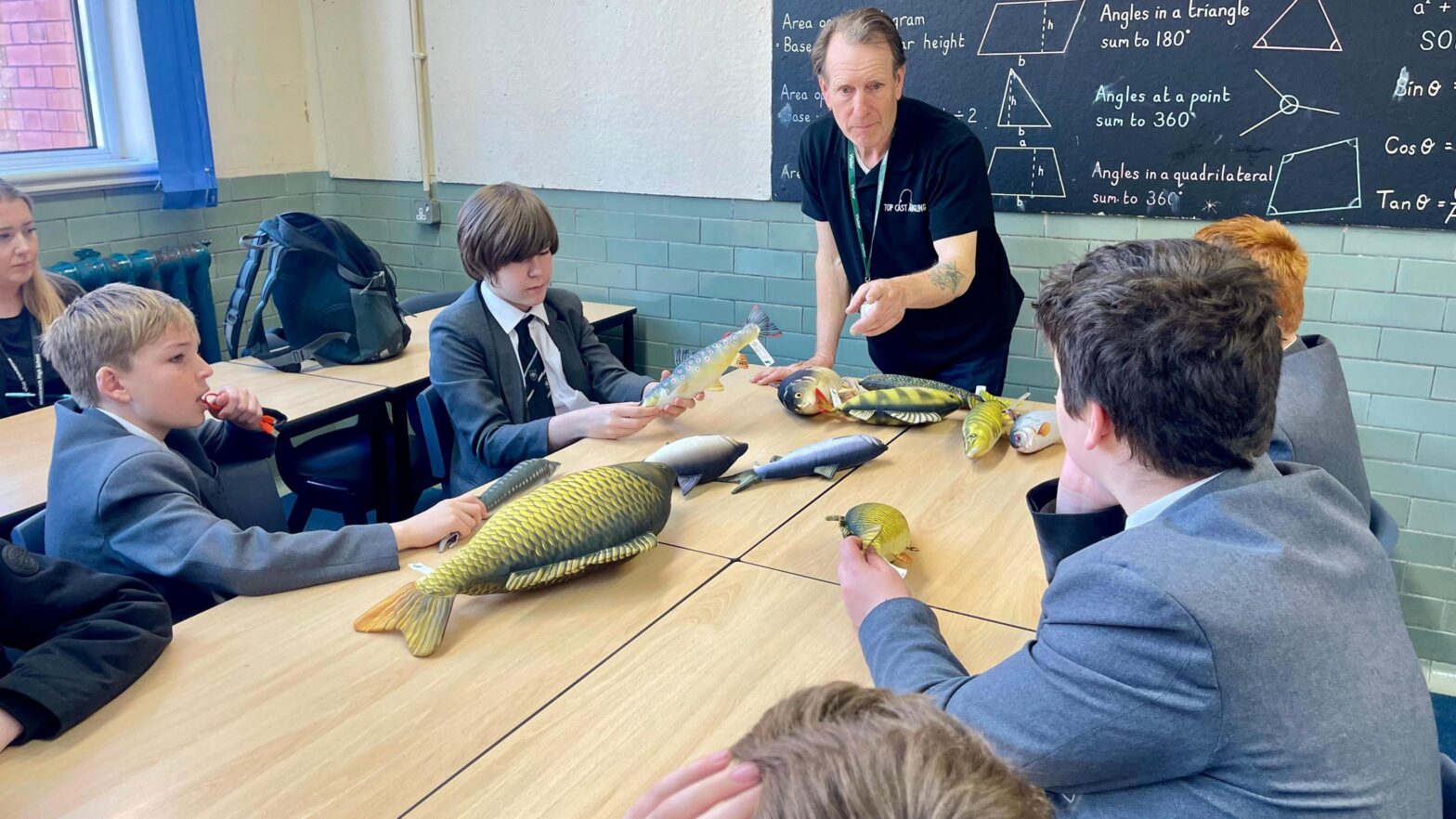
Are Teachers Teaching Your Children How to Fish?

Ever since the pandemic in 2020, I have had continuous thoughts about Are Teachers Teaching Your Children How to Fish?

My youngest grandson was affected during his senior year in High School, as I witnessed what was happening from High School to College.

Although he has graduated from college, I often wonder about how the education system is being challenged while the administration is dismantling various parts of it.

The Plan to Abolish the Education Department—One Year Later | NEA

Bills axing the Education Department introduced by GOP lawmakers

I have personally visited the Board of Education before the pandemic and am thinking very hard about seeing them again to get a better understanding.

One piece of advice that I received is to understand which schools are invested in getting their teachers National Board Certified.

I’m aware that there are “Five Core Propositions” that describe what teachers should know and be able to do.

Proposition 1: Teachers are committed to students and their learning.

Proposition 2: Teachers know the subjects they teach and how to teach those subjects to students.

Proposition 3: Teachers are responsible for managing and monitoring student learning.

Proposition 4: Teachers think systematically about their practice and learn from experience

Proposition 5: Teachers are members of learning communities

The National Board certification process is designed to collect standards-based evidence of accomplished practice. In all 25 certificate areas, candidates are required to complete four components.

COMPONENT 1: Content Knowledge.

COMPONENT 2: Differentiation in Instruction.

COMPONENT 3: Teaching Practice and Learning Environment.

COMPONENT 4: Effective and Reflective Practitioner.

Maybe it’s because I have a master’s in education with a concentration on Instructional Technology that all this bothers me when it comes to education.

I always get a kick out of watching kids work at the cash register when pennies were in use or when the machine was out of order.  Many of them could not add or subtract without pulling out their phones for assistance.

It is the dismantling of the education system that sends the message about what is being taught in our schools these days.

When I look at the credentials of various people running our country, one has to think why they were chosen for the job.

Suffice to say, in the end, what cost will all of us pay for how this country is being run, or those affected, for making poor decisions?

Do you remember the words of the three R’s in Education and Learning

The 3 R’s of Education: Reading, Writing &Arithmetic

The phrase 3 R’s of Education encompasses:

Reading: the ability to decode text, comprehend meaning and engage with ideas.

Writing: the ability to express thoughts, structure ideas and communicate effectively.

Arithmetic: the ability to understand numbers, operations and problem-solve in everyday life.

We need all 3 R’s today in our society, as reading is a daily habit for me.

When I think of how people communicate and what I went through with all the various research papers I wrote without the use of AI, it is unbelievable.

Finally, as I sit on various boards, being able to understand the finances and numbers and manage funds is so important.

It’s this foundation I believe we all see continues to be weakened with no voices being heard to protect it.

Interestingly enough, families will move into neighborhoods that support a great school system; however, are they engaged in what is being taught to their children as they pay the costs of living in that area?

In a recent article online from AL.com, “Many Alabama virtual school students lack basic math and reading skills, report cards show.”

https://www.al.com/news/2026/08/many-alabama-virtual-school-students-lack-basic-math-and-reading-skills-report-cards-show.html

That alone signals trouble to me.

It’s already bad enough that Alabama is ranked 43rd in the public-school ranking by state for 2026 as we begin to start another school year this week.

https://worldpopulationreview.com/state-rankings/public-school-rankings-by-state

Therefore, the question is: Are teachers teaching your children how to fish or just helping them bait the hook?

Today, I challenge you to think about whether teachers are teaching your children how to fish or just helping bait the hook.

Give a man a fish, and you feed him for a day.  Teach a man to fish, and you feed him for a lifetime. Proverbs

Blog source: https://mckinleysthoughts.com/are-teachers-teaching-your-children-how-to-fish/

Tuesday, August 4, 2026

Why Local Businesses Near Huntsville Trust McKinley's Thoughts for Leadership Training

You can tell within five minutes of a meeting whether a team has a real leader or just someone with a title. That gap is what pulls most business owners into looking for help in the first place. In and around Huntsville, a lot of that search ends at McKinley's Thoughts, a program built by a retired Command Sergeant Major who spent 30 years leading soldiers before turning that experience toward local businesses.

What Leadership Training Actually Is

Forget the image of a rented conference room and a slideshow nobody remembers by Friday. Real leadership training is coaching people through the stuff that actually trips them up at work: hard conversations, missed deadlines, a team that's stopped trusting each other. It's less about theory and more about giving someone tools they'll still be using six months later.

Why It Matters More Than Most Owners Realize

Huntsville's economy runs on defense, aerospace, and a growing wave of small businesses trying to keep good people. And good people don't leave jobs, they leave bad managers. That's usually the moment a business starts typing "leadership training near me" into Google at 9pm after a rough week. What they're really looking for is someone who's actually led people under pressure, not a certificate mill. That's the whole reason McKinley's Thoughts exists: three decades of active-duty command experience, paired with certified John Maxwell coaching, applied to real teams instead of hypothetical ones.

How It Actually Works

There's no one-size-fits-all package here. A first conversation is spent figuring out what's actually going wrong: Is it a communication breakdown? A new manager who's never led anyone before? A team that's technically skilled but falls apart under stress? From there, the training gets built around that specific problem using modules like Conflict Resolution, Emotional Intelligence, or Strategic Planning, whichever fits.

The Process, Step by Step

  1. A real conversation first — no sales pitch, just an honest look at where the leadership gaps are.
  2. A curriculum built around your team, not a generic template pulled off a shelf.
  3. Workshops that involve people doing the work, not sitting and listening for two hours.
  4. Time between sessions to actually try things, because skills stick when they're practiced, not just discussed.
  5. Coaching that continues after the workshop ends, so the lessons don't fade in a month.
  6. Honest tracking of what's changed — better communication, fewer blowups, faster decisions.

What Actually Works

Get leadership at every level in the room, not just the managers who already agree with you. Pick a trainer who's actually led people, not just studied leadership theory. Treat this as something you keep doing, not something you check off a list once a year. And pair the group sessions with one-on-one coaching wherever you can; it's where the real breakthroughs happen.

Where Most Companies Go Wrong

The biggest mistake is buying a generic seminar because it was cheap or convenient, then wondering why nothing changed. A close second is treating training like a one-time event instead of an ongoing relationship. And a lot of companies pick trainers purely on credentials, without asking whether that person has actually led anyone through a hard moment. That's usually what separates a forgettable seminar from a company that finally finds leadership training near me and sticks with it for years, because the person leading it has actually been in the room when things went sideways.

Conclusion

Nobody becomes a better leader from one workshop. It happens through repetition, honest feedback, and someone who's actually done the job pushing you to get better. That's the difference between training that looks good on a calendar invite and training that changes how your team actually works.

Ready to Build Stronger Leaders in Your Organization?

McKinley's Thoughts brings 30 years of active-duty leadership experience straight to your team, no fluff, no filler. If your business needs leaders who can actually lead, let's talk.

Address: 256 Bob G. Hughes Blvd, Harvest, AL 35749

Call: (706) 627-4863

Email: sitruc3@gmail.com

Reach out to McKinley's Thoughts today and let's build the team your business actually needs.

FAQs

What are the 7 C's of leadership? Character, Competence, Communication, Commitment, Confidence, Courage, and Compassion. They're not abstract ideas either — a leader missing even one of these usually shows it fast, whether it's broken trust or a team that stops speaking up.

Why do you want to attend leadership training? Honestly, most people attend because they hit a wall — a promotion they weren't ready for, a team that's not listening, or a conflict they don't know how to handle. Training gives you the tools so the next wall doesn't stop you.

What are the 5 P's of effective leadership? Purpose, Passion, People, Process, and Performance. Miss any one of these and the others start to wobble — passion without process burns out, process without people feels cold.

What are the seven qualities of a good leader? Integrity, self-awareness, courage, respect, empathy, gratitude, and resilience. None of these are talents you're born with. They're built, usually the hard way.

What are the 8 pillars of leadership? Vision, communication, integrity, accountability, empowerment, adaptability, decision-making, and emotional intelligence. Most leaders are strong in two or three and weak in the rest — training is about finding out which ones need work.

Sunday, August 2, 2026

Accountability Partners

Career Planning Concept. Businessman Getting Help Building Bridges To Success.

During my time in the military, we had something called the buddy system, where two individuals always knew each other’s whereabouts, both mentally and physically.

Today, as adults, we sometimes need a buddy system not just for our whereabouts, both mentally and physically, but also for someone to bounce an idea off that we’re thinking about in life.

In recent years, I’ve had the opportunity to participate in two Maxwell Leadership Accountability sessions that last, I believe, 90 days each.

Each one of those accountability sessions was where we met each week for an hour to discuss various things we were working on.

It was a commitment within the group to be accountable to each other.  Although we had three people within our group, it was probably the most meaningful weekly conversation I’ve experienced.

We are all undisciplined in various areas of our lives, whether we know it or not.

As John Maxwell says, “Accountability makes us better.”

Sometimes we need to recognize there are gaps in our lives that need help closing.  What gap do you need closing today?

Accountability Makes You Better | Maxwell Leadership

There is also a word called self-accountability.

Meaning taking responsibility for our own actions.

We should all take notice that having the proper mindset is so important.

I can vividly remember my Saturday morning 5- to 10-mile runs with two or three running buddies years ago. Especially during my time in the military when I was stationed in Hawaii and Fort Bragg.

Back in those days, you were required to run four miles within 32 minutes.

It paid off for me when I went to Airborne and Air Assault school during my time in Hawaii from1985-1989.

I didn’t hurt knowing I was already in great shape from being a Drill Sergeant for three years prior, 1982-1985.

I knew if I didn’t show up, they wouldn’t call me out because back then no one carried phones to go running.

That’s why our words must matter along with the proper mindset.

How we speak to ourselves is so important, which is tied to our purpose.

Having the proper mindset is so important.

If you haven’t read Carol S. Dweck’s book Mindset: The New Psychology of Success, I would highly recommend it.

Dweck’s Mindset Theory: How to Develop a Growth Mindset – Growth Engineering

For those who have accountability partners, continue to tap into each other for support.

For those who don’t have accountability partners, I pray that you pick some who will help hold you accountable.

Try it; you might like it.

This week, as you look at your busy schedule, think about those who are holding you accountable.

Sometimes procrastination can get the best of us, myself included.

Although my running days are over, I still hold myself accountable for my weight and appearance.

Today, I challenge you to think about who’s holding you accountable when no one else is. Think about the last time you were held accountable for your actions or just doing something you said you would do?

We are all aware that life sometimes gets in the way, and sometimes we need to be like the Nike slogan and “Just do it!”

“Your life does not get better by chance; it gets better by change.”~ Jim Rohn

“The moment you take responsibility for everything in your life is the moment you can change anything in your life.” ~ Hal Elrod

Blog source: https://mckinleysthoughts.com/accountability-partners/

Wednesday, July 29, 2026

Stop Complaining

Have you ever noticed that in life we meet people who complain about anything and everything?

When was the last time you complained about something that was either trivial or not?

What I would challenge you to do is sit in the lobby of any hospital and watch the people entering or exiting the facility the next time you feel like complaining.

How do we look at life?

This is not a rhetorical question; it’s a question for you to decide where you are going and whether you are accepting your lot in life.

Having said that, my heart is heavy once again as I receive notifications about the deaths of two people whom I knew who recently passed away.

These are people that I knew personally and witnessed them adding value to others.

How we make the most of our time here on this earth is up to us.

This goes for gossip as well.

I’m reminded of James 3:5 and the “Taming of the Tongue,” where I learned years ago to let things go.

When I received the meaning behind James 3:5, I was told to ask three questions:

Is it true, is it kind, is it necessary?

In response to the three questions, should the person continue speaking only if they can say “yes” to all three?

James 3:5 In the same way, the tongue is a small part of the body, but it boasts of great things. Consider how small a spark sets a great forest ablaze.

Persons/Places/Events

James
The author of the epistle, traditionally identified as James, the brother of Jesus. He was a leader in the early Jerusalem church and wrote to Jewish Christians scattered among the nations.

The Tongue
A metaphorical reference to human speech and the power of words. In this context, it represents the potential for both good and harm.

The Body
Represents the whole person, emphasizing how a small part (the tongue) can influence the entire being.

The Spark
A metaphor for a small action or word that can lead to significant consequences, much like a tiny flame can ignite a large fire.

The Forest
Symbolizes the broader community or world, illustrating how words can have far-reaching effects.

This past week, Toastmasters International announced an increase in membership dues from $60 to $72 for the six-month dues renewal fee effective August 3, 2026.

Just years ago, when it went from $30 to $45 to $60, now, on August 3, 2026, to $72, I’m sure there will be members unwilling to pay the dues increase.

For some, it will be “The Spark” that ignites a large fire among other members.

I witnessed it coming based on what happened when Membership dues increased on August 1, 2023 (from $45 to $60 semiannually).

Of course, the August 2023 change was the last time the core membership dues were adjusted, with the 2025 new member fee increase being the most recent fee-related update. New member fee increase: October 1, 2025 (from $20 to $25).

I’m telling you this as only an example of the spark that can ignite a larger flame. You can’t even imagine the people who complained three years ago and how they voiced their feelings of dissatisfaction.

Everyone has something to complain about; however, is it worth it?

We have choices in life: accept our lot or change it.

I won’t get into what the Bible says; however, we should accept and rejoice in what we have been given.

Hence, as an advocate for developing greater emotional intelligence, choosing to change requires self-awareness, courage, and deliberate action.

It also requires discernment. That’s what I learned from reading the Bible.

Every day is a choice, and complaining about it is not the answer.

Therefore, on this day, if you’re complaining about something, is it worth the emotional stress, or can you just let it go?

Besides, we’ve all heard the phrase Why complain? It does go anyway.

How we downplay it is totally up to us.

Therefore, we should just be grateful and rejoice in what we have been given.

I’ll give you two quotes to think about this week:

“You don’t make progress by standing on the sidelines, whimpering and complaining. You make progress by implementing ideas.” – Shirley Chisholm

“Never tell your problems and complaints to anyone; twenty percent don’t care, and the other eighty percent are glad you have them.” – Lou Holtz

Today, I challenge you to ask the question the next time you feel like complaining: Is it worth it? Give yourself 24 hours to think about it. If not, think about taking a trip to your local hospital and sitting in the hospital lobby that I mentioned earlier.

Blog source: https://mckinleysthoughts.com/stop-complaining/

Tuesday, July 21, 2026

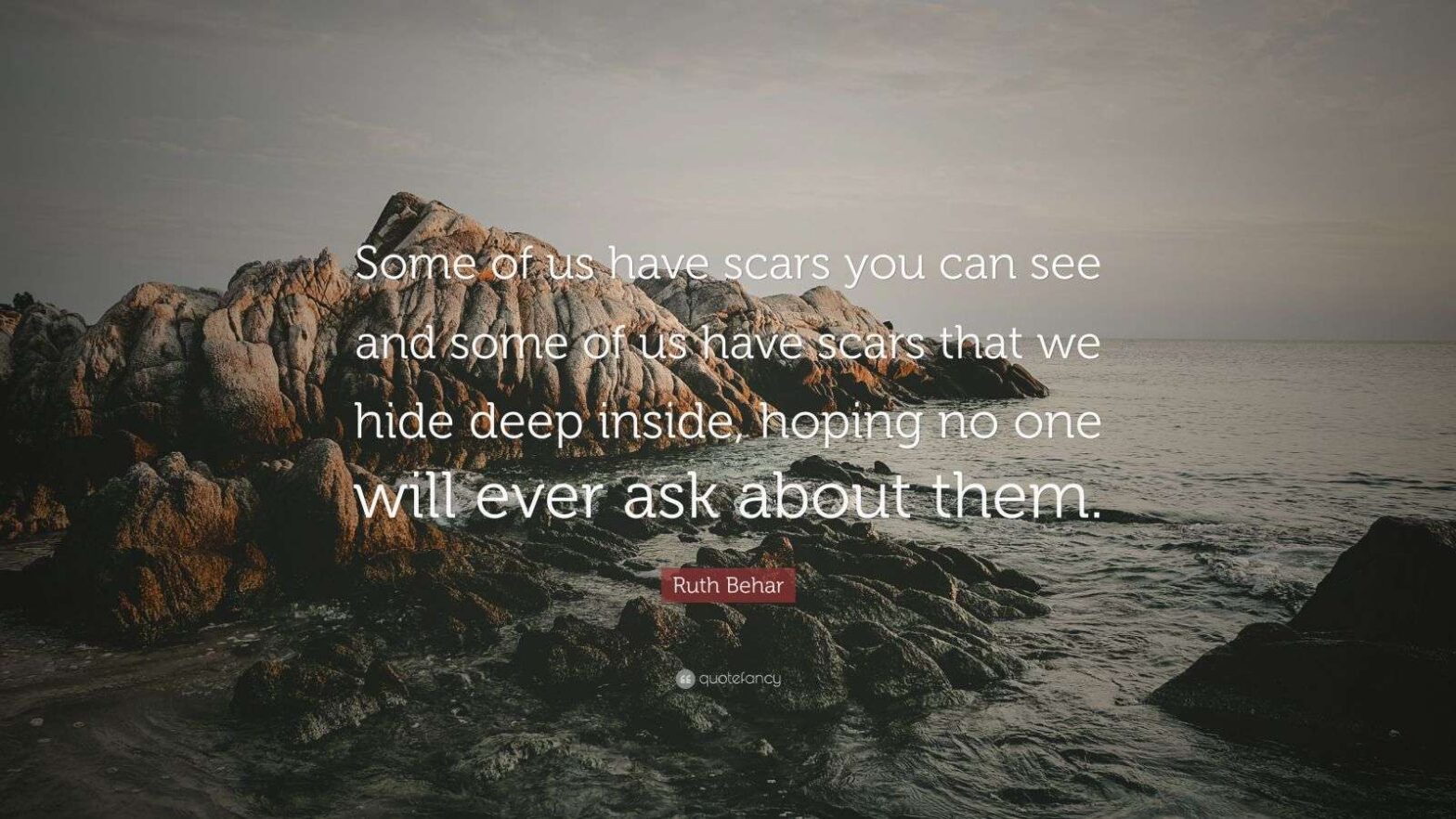
The Scars We Hide and Those We Don’t

Allow me to ask you a question:  Have you ever heard the words “What doesn’t kill you will make you stronger”?

This famous saying comes from the German philosopher Friedrich Nietzsche, who wrote in his 1888 book Twilight of the Idols.

What Doesn’t Kill You, Makes You Stronger Meaning: What Does It Mean? – English Study Online

Although I’ve spent many years in Germany, I was unaware.

As a product of the Civil Rights Movement and a Baby Boomer, I grew up with parents who didn’t believe in sparing the rod.

There are various versions of Proverbs 13:24, tied to sparing the rod depending on how you feel; I’m sure one of them suits you best.

Proverbs 13:24 He who spares the rod hates his son, but he who loves him disciplines him diligently.

Today, we know that what happens to children who misbehave or do not listen to their parents is different from what it was in the past.

I don’t consider myself someone who misbehaved, but someone who obviously didn’t understand what I was told to do.

Sometimes I took those whippings for the team.

I recently burned myself about a month ago, taking something out of the oven. The burn was not visible on the front of my arm, but on the back of my forearm, which was hidden from those approaching me from the front.

Although I didn’t see the scar until two days later, I felt it for days after the event.

As I think about the scars we hide, I’m always concerned about the scars we don’t see.

Just like my burn that showed up after the fact. I didn’t see it right off; it took it forming properly for me to see it.

Every day, when I walk into places like Walmart or other places where I must navigate past people, I look at their faces.

Each person has a different façade they bring to the marketplace.

Granted, I didn’t grow up with a silver spoon in my mouth and have lived all over the world after my high school graduation.

It was in those lessons of understanding responsibility, where my parents, who didn’t believe in sparing the rod if one of my siblings got hurt or I didn’t obey, helped make me stronger.

There is a time and a place for everything, and luckily, I had great mentors in the military who shared their wisdom.

But what about our youth today- who’s giving them the guidance and wisdom required to be more disciplined in life?

Many years ago, I was required to study Sigmund Freud as part of my Clinical Mental Health Counseling program to understand the Id, Ego, and Superego.

Maybe that is why the scars we hide and those we don’t are what my unconscious mind is thinking about today.

Freud’s Theory of the Unconscious Mind: The Iceberg Analogy

We don’t know what the surface is until we trigger something, and then it’s up to us to react either in the Id, ego, or superego.

One of the things I’m most proud of is my patience as I write in my journal when I need to exercise better self-control.

Although I know the scars that I had to go through to get to a point in my life, many don’t see the scars because there’s an analogy of not keeping good records of bad things that resonates within me.

Don’t Keep Records of Bad Things – Mckinleys

This week is my reminder that “The Scars We Hide and Those We Don’t” are real, and it’s a matter of letting go of things that can rob you of your joy.

Frank Sinatra has said, “Don’t hide your scars. They make you who you are.”

All those people whom I see with frowns on their faces that I mentioned in places such as Walmart or other places where I must navigate past people, this is why I look at their faces.

“Live your life in such a way that you’ll be remembered for your kindness, compassion, fairness, character, benevolence, and a force for good who had much respect for life, in general.”  ― Germany Kent

“No matter how dysfunctional your background, how broke or broken you are, where you are today, or what anyone else says, YOU MATTER, and your life matters!”  ― Germany Kent

Today, I challenge you to put a smile on your face, because someone else is in a worse shape than you.

Thursday, July 9, 2026

What Makes Our Leadership Development Coaching Different from the Rest?

I spent 30 years in active-duty service, leading soldiers through some of the most demanding environments imaginable. When I retired, I carried a second title into civilian life as a GS-13 in federal service, closing out that chapter on January 31, 2019, after 14 more years of leading people toward mission success. Folks around here know me as McKinley, but most call me Charlie Mike — CM for short, a term that in military circles means "continue mission." That's exactly what I've done since hanging up the uniform: continued the mission of building better leaders, one person and one organization at a time.

Real Experience, Not Just Theory

There's no shortage of coaching programs out there promising to transform your team overnight. What sets my approach apart is simple — I've actually lived it. For three decades, I was responsible for the readiness, morale, and performance of people whose decisions had real consequences. I didn't learn leadership from a textbook; I learned it in the field, under pressure, and through 44 combined years of watching what works and what doesn't. When you work with a Leadership Development Coach who has genuinely led at every level, from junior soldiers to senior leadership, you get insight that's grounded in experience rather than theory alone.

A Program Built Around the Whole Leader

My coaching isn't a one-size-fits-all seminar. I structure development around the real skills leaders need to succeed: emotional intelligence, conflict resolution, performance measurement, team building, communication, resiliency, and crisis leadership. Each module is designed to meet leaders exactly where they are, whether they're a first-time supervisor or an executive steering a large organization. As a certified Maxwell Leadership coach, trainer, and speaker, I blend proven leadership frameworks with the discipline and adaptability I developed through military and civil service. That combination is rare, and it's what allows me to speak to both the technical side of leadership and the human side — because leadership, at its core, is about people.

Coaching That's Personal, Not Generic

Too many leadership programs treat every client the same way. I don't. Every organization has its own culture, its own challenges, and its own definition of success. My coaching sessions, workshops, and mastermind groups are built around your specific goals, whether that's improving conflict resolution among your team, sharpening decision-making under pressure, or developing the next generation of leaders inside your company. I take the time to understand where you are and where you want to go, then I build a plan to get you there — not a generic slideshow, but a genuine partnership focused on measurable growth.

Accountability Rooted in Discipline

If there's one thing three decades of service taught me, it's accountability. I don't just deliver a workshop and walk away. I check in, I follow up, and I hold the people I coach to the standards they set for themselves. That's what a serious Leadership Development Coach should do — stay engaged in your progress long after the initial session ends. Growth doesn't happen in a single meeting; it happens through consistent reinforcement, honest feedback, and a coach who is invested in your long-term success, not just a one-time transaction.

Leadership That Rises Above the Noise

My philosophy is straightforward: rise above your limits. Whether I'm coaching an individual working through a career transition, training a corporate team on communication and productivity, or speaking to a room full of professionals about resilience, the goal is always the same — equip people with the tools to lead with confidence, clarity, and purpose. That's not a marketing slogan for me. It's the same standard I held myself to in uniform and in federal service, and it's the standard I bring to every client relationship today.

If your organization is ready to move beyond generic training and invest in leadership development that's built on real experience, genuine accountability, and a track record of results, let's talk. Reach out today at (706) 627-4863 to schedule a consultation, and let's start building the kind of leaders your team can count on — because the mission continues, and I'm ready to help you lead it forward.

FAQ’s (Frequently Asked Questions)

  1. What does a leadership development coach do?

A leadership development coach works one-on-one (or with teams) to help leaders build specific capabilities — self-awareness, decision-making, communication, and the ability to navigate change — through structured, on-going sessions rather than a single presentation.

  1. What are the 5 C's of leadership development?

There's no single universally agreed-upon version of the "5 C's," but the most commonly cited framework centers on Character, Competence, Communication, Courage, and Compassion.

  1. What is the 70-20-10 rule for leadership development?

The 70-20-10 rule is a learning framework developed by researchers at the Center for Creative Leadership, based on decades of studying how executives actually learn to lead. The model calls for 70% of development to come from on-the-job learning, 20% from coaching and mentoring, and 10% from formal classroom training.

Thursday, July 2, 2026

Faith

Today, I’m reflecting on the word’s faith the size of a mustard seed.

What is it that we believe?

It’s not so much about the various faiths we belong to. it’s about the things we put our faith in every day.

Recently, my doorbell rang, and to my surprise, there were about four other couples, all elderly black women and men, walking the neighborhood.

The opening question I was asked is “How am I dealing with the current situation in the world, with all that continues to divide us?”

It was an open question that I felt the need to ask them to come inside for a minute and offer them some water.

Little did I know my faith and knowledge were tested by what they both presented to me under Mosaic law and what I believed after going through the book of Galatians and the new covenant.

As a person of faith and somewhat familiar with the Bible, we talked about the new covenant under Jesus rather than Moses.

Although it was truly a learning experience for all, they wanted to come back and visit, which I said yes to if I were home again when they rang my doorbell.

This got me thinking about how faith can plant a seed in a ministry as they walked the neighborhood expressing their faith to others.

Today, each of us puts our faith in many different things.

We want our children to see our faith in us as we practice living a life filled with grace and mercy.

I’m aware we should all be a living letter as stated in the Bible.

“Are we beginning to commend ourselves again? Or do we need, like some, letters of recommendation to you or from you? 2 You yourselves are our letter, written on our hearts, known and read by everyone. 3 You show that you are Christ’s letter, delivered[a] by us, not written with ink but with the Spirit of the living God—not on tablets of stone but on tablets of human hearts.”

2 Corinthians 3-4 CSB – Living Letters – Are we beginning to – Bible Gateway

In life, we sometimes take things for granted and accept them as they are.

One of my responses to the Jehovah’s Witnesses team was that it’s the same God today as it was yesterday.

I was pleased to see that faith works in mysterious ways, as President Trump’s bill (the Save America Act) didn’t pass, with four Republicans voting against it.

This is not the first time we have had senators from President Donald Trump’s party join Democrats.

If you recall, it was his “One Big Beautiful Bill,” which narrowly passed the upper chamber with a tie-breaking vote from Vice President J.D. Vance.

We saw this with four Republicans joining Democrats in the House vote to rein in Trump’s Iran war powers.

I often wonder what families are saying to their children, or what others are thinking out loud, when going against the norm, as we witnessed this past week.

I’m also thinking about what happened this past weekend at the Hilton Garden Inn Montgomery – East Chase in Montgomery, AL, which I couldn’t attend, based on other commitments, was our 53rd Biennial Gulf Coast District Junior Conference, sponsored by the Knights of Peter Claver and Ladies Auxiliary.

I’m reminded of the phrase as we help our children grow in faith.  “Train up a child in the way he should go, and when he is old, he will not depart from it.”

Many of the Junior Knights and Junior Daughters, when they reach the age of 18, officially join the Knights of Peter Claver and the Ladies Auxiliary.

Proverbs 22:6 – Bible Gateway

I must believe that people will do the right thing for the right reason.

I read a quote from Max Lucado that says, “Faith is not the belief that God will do what you want.  It is the belief that God will do what is right.”

That is faith within itself.

I’m sure also that many who watched the price of gas go down this week had faith it wouldn’t go any higher.

This past Friday, I also received an email from one of my Catholic Brother Knights in Georgia, stating that one of our Brother Knights was receiving his last rites from the Priest.

Four hours later, I received another call saying that he had passed away.

It’s that faith I wonder about as well when we know death is imminent.

Each of us has taken the faith when we seek employment for the right job, and the faith that we will find another job when the employer decides to let us go.

I’ll wrap this up by saying that I never relented my faith when the family hadn’t heard from my older sister, and the relief it was when she appeared two years later.

Yes, we must have faith in the size of a mustard seed in times like these.

I’m a firm believer that everything is temporary.

Finally, just like the farmer who continues to plant his corn and cotton fields around me each year, he has faith that his crops will grow.

The farmer can’t see the seed working and must have faith in the process.

When I planted my yearly Mexican Roses a month ago, I could not see the roots taking hold until two weeks later, with little green sprouts popping through the soil.

Last year, one Rose appeared; this year, there is a 100% difference this year, with everything popping through the soil.

It is faith that it’s the same God yesterday as it is tomorrow.

Faith is believing in what you cannot see and trusting in what you hope for.

“Now faith is the assurance of things hoped for, the conviction of things not seen.” — Hebrews 11:1

“For nothing will be impossible with God.” — Luke 1:37

Today, take a moment and reflect on your faith. What’s your faith story running in the background of your mind that you tell yourself today, that you are leaving to all mighty?

Blog source: https://mckinleysthoughts.com/faith/

Tuesday, June 30, 2026

We often take for granted the very things that most deserve our gratitude


This week, I had an epiphany about all the things I or we take for granted.

As I was standing in line at Walmart, something was unusually different.

It just so happened that all traffic for those waiting for check-out was limited, with only two check-out lanes open.

As I walked past the first group, there were at least 10 people in each line.

Finally, after about ten minutes, management decided to open the three closed kiosks and check-out lanes.

What a blessing that was.

The line disappeared within seconds, even though at least 12 kiosks were open for transactions.

Sometimes, when we’re in a hurry and think it’s going to be a quick turnaround, it isn’t.

In that moment, I thought about how automated we have become.

Even as we prepare for our Zoom meeting, we take for granted that our computers will be okay in the middle of a storm, until the power goes out.

We can’t predict the weather or what happens in grocery stores; however, we can be more cognizant about our surroundings.

I’m always amazed at how, some days, I can wake up without an ache or pain, and then the next day, something changes and reminds me that life is full of curveballs.

Speaking of curveballs, I was thrown one last Wednesday when the recycling people skipped my house.  I heard the truck at about 4 PM and noticed it was going around me.

Around 6 PM, I saw the truck return again; this time, it was across the street, and I thought it was going to turn at the corner and head to the other side.

Sometime around 9 PM, after checking to see if it was emptied to bring it in, it was still full.

It was at that moment that I said I couldn’t take the small things for granted when the recycling people skipped my house.

I know that last Monday, I couldn’t take things for granted, even though I’d bought a ticket weeks ago to attend the Moth in Birmingham.  Unfortunately, the weather warnings were telling me to stay home, which I did.

It just so happened that the city was under a Tornado watch, and I didn’t want to take things for granted.  It stormed up until 8 PM

The Moth StorySLAM is an open-mic storytelling competition where anyone can share a true, personal 5-minute story on the night’s theme.

The Moth in Birmingham: REVENGE

I’ve learned to count my blessings and be grateful at the same time.

This past week, I’ve taken in many lessons about taking things for granted, while having a few curveballs being thrown along the way.

What about you?

I’ve learned over the years, and not just this week, that our health is something I took for granted when I was young, thinking I was 30 and bulletproof.

It’s not until we get thrown that curveball that we’re reminded we are not the same person and are now older.

Today, I challenge you to take a moment to reflect on those many lessons about taking things for granted, while having a few curveballs being thrown your way.

When you take things for granted, you diminish their importance and may even jeopardize their very existence. – Frank Sonnenberg

Happiness is a simple game of lost and found: Lose the things you take for granted, and you will feel great happiness once they are found. – Richelle E. Goodrich

Blog source: https://mckinleysthoughts.com/we-often-take-for-granted-the-very-things-that-most-deserve-our-gratitude/

Wednesday, June 24, 2026

Education Rankings in the United States

We are now somewhat out of school for the summer, yet I still see school buses running in my neighborhood each morning.

Have you ever thought about what your state’s educational rankings are?

As commercials continue to run for those seeking public offices, I heard this past Thursday that Alabama is 43rd in the nation.

I had to verify the information immediately, and it’s true.

I knew that education would be a challenge this year due to the current administration’s dismantling of various education offices.

Why are those school buses still running, and what are we expecting our teachers to teach the world’s future leaders?

Today, television and social media have diminished learning.

I can remember my parents unplugging the television or not watching any television until my homework was completed and checked.

I also remember how “C’s” were not allowed in our home.

They expected us to thrive and not survive.

Today, I wonder what the Bell Curve is for receiving a B.

I’m currently in the latter part of a Toastmasters’ eight-week Youth Leadership Program.  I can visibly see how students are feeling the pressure of high school.

They were worried about finals and the end-of-year test weeks ago.

As one with a master’s in education, my thoughts are not far from the book I read titled “The Global Achievement Gap,” Why even our best schools don’t teach the new survival skills our children need and what we can do about it, by Tony Wagner.

The Global Achievement Gap was a required reading for leaders during my time as a Department of Defense Civilian training soldiers.

I’m aware that high school students are not soldiers; however, many will join the military or further their education.

The sad part is that many of these students will become parents with few skills to assist their children.

The teachers today must have a passion for their profession and not see it as just a paycheck.

A few months ago, I was also looking into visiting the Board of Education, which is another project I am working on in the background.

It’s about how I can assist teachers in passing the National Board for Professional Teaching Standards certification and the Modules.

National Board Certification (NBC) is the highest teaching credential in the U.S., offered by the National Board for Professional Teaching Standards (NBPTS). It is designed to identify, honor, and support teachers who meet rigorous standards for teaching excellence.

NBPTS Main Site Certification – NBPTS Main Site

As mentioned, Alabama is ranked 43rd in the nation.  The “Public School Rankings by State 2026” is in the link below so that you can see where your state ranks.

Public School Rankings by State 2026

I’m humbled to see New York as number one because I went to grade school at PS 104 in Brooklyn many years ago.  It was evident then that education was important and that when our family returned home to Virginia, I was ahead of my peers.

Some things never change, or do they?

Today, I challenge you to take a moment to reflect on your education and how you are helping others achieve the American Dream.

“Education is the most powerful weapon which you can use to change the world.” — Nelson Mandela

“Live as if you were to die tomorrow. Learn as if you were to live forever.” — Mahatma Gandhi emphasizes lifelong learning and the urgency of knowledge.

“I have never let my schooling interfere with my education.” — Mark Twain highlights the difference between formal schooling and true learning.

“The roots of education are bitter, but the fruit is sweet.” — Aristotle reminds us that effort in learning yields lasting rewards.

“Education is not preparation for life; education is life itself.” — John Dewey stresses that learning is an ongoing, integral part of living.

“Education is the ability to listen to almost anything without losing your temper or your self-confidence.” — Robert Frost highlights the role of education in cultivating patience and critical thinking.

All these quotes reflect the power, purpose, and philosophy of education, inspiring both students and educators to value knowledge, critical thinking, and personal growth. Each can be used for motivation, classroom discussions, or personal reflection on the lifelong journey of learning.

Blog source: https://mckinleysthoughts.com/education-rankings-in-the-united-states/

Monday, June 22, 2026

Six Degrees of Separation

Earlier this week, I had the opportunity to celebrate Juneteenth.

For many, that word doesn’t mean much because some don’t understand the history behind why we, as people of color, celebrate Juneteenth in June.

I only wish our younger generation had the opportunities I had in school.

I titled today’s blog “Six Degrees of Separation” after the people I met at this year’s Juneteenth celebrations.

The first was meeting a classmate of mine from the United States Army Sergeants Major Academy (USAMA).

I met my classmate through a conversation about our shared status as Command Sergeants Major.

It wasn’t until he asked me to validate my age by asking for my class number.

When I said Class 41, his eyes lit up because it was a connection to yes, I know you now, and validated my presence.

Class 41 was the last six-month resident class, from January 1993 to July 1993, before the class went to a nine-month resident class.

On July 27, 2026, they will welcome Class 77!

Resident Students

Not only were he and I graduates of the First Sergeant Course, but we were also graduates of the same learning institution (USAMA).

There are not many of us left who have attended both of these courses.  The First Sergeant Course helped me become a better First Sergeant and improve my writing.

I’m sure many of us know the power of a red pen.

I’m always impressed when I have a connection or make a NEXUS through six degrees of separation.

For those who read, I would recommend reading Nexus: Small Worlds and the Groundbreaking Science of Networks by Mark Buchanan. (Author).

Once you read it, you’ll understand the power of networks, weak and strong ties.

I first learned the word and its meaning behind “Nexus” during my Starfish Training in 2010, when I was required to read Nexus: Small Worlds and the Groundbreaking Science of Networks by Mark Buchanan.

Speaking of Six Degrees of Separation, I met a gentleman during the Huntsville, AL (Juneteenth Celebration) wearing a B-52 Bomber hat.   Ironically, he and I spoke about the Boeing B-52 Stratofortress, which crashed on Monday (June 15, 2026) shortly after takeoff.

Little did I know he was first a Navy Sailor, then joined the Air Force, retiring as a Major and a B-52 Bomber. The connection brought him back to show me pictures in uniform for both services or branches.

I am always humbled when I meet interesting people with interesting stories about the military.

I wrote in my journal that week how grateful I was to have met him and to have taken the time to start a conversation after seeing him in his B-52 hat at the Huntsville, VA Clinic.

Finally, I attended a Juneteenth Celebration in Pass Christian, Mississippi, where I met an Atlanta Falcons cheerleader who was the granddaughter of someone with a rich legacy in Pass Christian.  Long story short, her grandfather and I have shared meals, and he has even been in my home here in Alabama.

I also have a Soldier whose daughter is also an Atlanta Falcon Cheerleader.  His daughter is in her fifth year, and the granddaughter I met is in her fourth year as an Atlanta Falcon Cheerleader.

Each year, they must try out to remain an Atlanta Falcon Cheerleader.

I connected the two of them by sharing a picture, and they connected as well.

In life, we never know the people connected to us until divine intervention occurs.

As a final piece to this blog, I was introduced to reading for pleasure this past weekend, Dr. Eddie S. Glaude Jr.’s book on America, U.S.A.

Dr. Eddie S. Glaude Jr.’s book on America, U.S.A., was read over Father’s Day Weekend as part of my Juneteenth Celebration. It was an interesting read and one that made me reflect deeply on my place in America.

I would never have known about this book had I not connected with a gentleman who not only reads my blogs and responses but is also a member of an organization we both support, the scholarship committee for the Jordan J. Corbett 555th Parachute Infantry Regiment, located in Tampa, Florida, known as the “Triple Nickels.”

On March 26, 2026, we connected in Tampa, Florida, during our Scholarship program, and we continue to stay connected through different levels of intellectual conversations.  I consider him a strong tie!

We meet people every day we can add to our network. Who have you met this past week to add to yours?

Here’s something to think about, as some of you may know who Kevin Bacon is, but may not know how it’s tied to six degrees of separation.

Six degrees of separation | plus.maths.org

Today, I challenge you to take a moment to reflect on all the connections you know and the people who are both weak and strong ties.

“Six degrees of separation doesn’t mean that everyone is linked to everyone else in just six steps. It means that a very small number of people are linked to everyone else in a few steps, and the rest of us are linked to the world through those special few.”~ Malcolm Gladwell

“I read somewhere that everybody on this planet is separated by only six other people. Six degrees of separation between us and everyone else on this planet. The President of the United States, a gondolier in Venice, just fill in the names. I find it extremely comforting that we’re so close. I also find it like Chinese water torture, that we’re so close because you have to find the right six people to make the right connection… I am bound, you are bound, to everyone on this planet by a trail of six people.” ~ John Guare

Blog source: https://mckinleysthoughts.com/six-degrees-of-separation/

Monday, June 15, 2026

Meet the Best Leadership/Success Speakers Who Teach Leadership Gold, Emotional Intelligence & Strategic Planning

Ever notice how some teams just get it—they move fast, make smart calls, and people actually want to work there? Meanwhile other teams feel stuck, confused about direction, and leadership feels like everyone's just going through the motions?

The difference usually comes down to one thing: who's teaching them how to lead. Most folks grow up thinking leadership is something you're born with or happens when you get promoted. That's dead wrong. Real leaders are made—and they're made by people who know how to teach what matters.

If you're looking for someone who actually knows this stuff (not just read about it in a book), you need to pay attention here. Because what separates ordinary teams from extraordinary ones isn't luck. It's training that sticks, coaching that matters, and learning from people who've actually walked this path themselves. I've seen it transform organizations from complete messes into high-performance machines.

Finding the Right Fit: What Makes Top Speakers Stand Out?

So what's the difference between a decent speaker and someone who genuinely transforms how your team operates?

Simple. One changes how people think for a day. The other changes how they lead for years.

The speakers worth your time have real scars in their career stories. They've managed teams during absolute chaos. They've made hard calls that kept people awake at night. They know conflict intimately—not from theory or textbooks, but from actually being in the thick of it. When someone like that talks about crisis management or team dynamics, you're not hearing motivational fluff. You're getting the real deal from someone who's actually been in the trenches. That's the difference you feel instantly.

What Are the Best Leadership/Success Speakers Actually Offering?

Let's get specific. Quality speakers focus on three things that actually move the needle:

First: Real leadership development. Not the "rah-rah" stuff. We're talking about spotting talent on your team, building them up, and creating a culture where everyone wants to step up. This is what true leadership gold looks like. When you do this right, people stay. Your best talent doesn't leave for another job. Teams gel faster. Turnover drops.

Second: Emotional intelligence—which is basically understanding people (including yourself). Here's the thing most leaders miss: you can have a brilliant strategy, but if your team doesn't trust you, nothing happens. If people feel like you don't get them, they hold back. Smart speakers teach you how to read people, manage your own emotions under pressure, and actually connect rather than just dictate orders. This isn't soft stuff. It's the difference between a team that follows orders and a team that goes to war for you.

Third: Strategic planning. You need people who can see where the market's heading, not where it's been. Who can build a roadmap everyone understands and will actually execute. Who can allocate resources intelligently instead of hoping things work out. McKinley Curtis III and speakers like him teach frameworks that Fortune 500 companies use—and they work just as well for mid-size businesses trying to punch above their weight.

Why Companies Are Actually Writing Checks for This

Let me give you the reality check. When organizations invest in serious leadership development:

  • Employee engagement jumps. We're talking 40-50% improvements in how much people actually care about their work.
  • People stop leaving. Turnover drops by a third. That's huge because replacing someone costs 50-200% of their salary. Think about that for a second.
  • Stuff gets done faster. Productivity shoots up because people aren't confused or working at cross-purposes.
  • Customers notice. When your teams are solid, customers feel it. Satisfaction goes up.

None of that happens by accident. It happens because someone brought in a real expert, invested time, and actually changed how the organization operates. I'm not exaggerating when I say this is literally one of the best ROI decisions a company can make.

The difference between throwing together a generic workshop and hiring a real speaker? One costs money and wastes everyone's time. The other costs money and transforms your organization.


What Are You Actually Learning?

Most programs worth your time hit these areas:

You can't avoid conflict—so you might as well get good at it. Conflict resolution training teaches teams how to disagree without destroying relationships. This alone saves most companies a fortune in drama and wasted time.

How do you know if people are actually doing better work? Performance measurement systems show you what matters and keep everyone accountable. Simple, right? Yet most teams just guess.

Teams that work together beat teams that just occupy the same space. Real team development creates chemistry. It's the difference between people who tolerate each other and people who actually have each other's backs.

Here's the key: these aren't separate topics. They're woven together. You can't get emotional intelligence without understanding yourself better. You can't do strategic planning without understanding your team's strengths. It all connects.

How Do You Start?

Stop and ask yourself some hard questions. What leadership gaps are costing you right now? Is it turnover? Is your team lacking direction? Are people not talking to each other? Do conflicts keep happening?

Once you know what you're fighting, you can find the best leadership/success speakers and the right program that addresses your specific needs.

Real training isn't a day-long seminar where everyone drinks coffee and pretends to take notes. It's ongoing. Some individual coaching. Some group sessions. People learning from each other. And follow-up—because behavior change takes time.

You're not going to a feel-good event. You're making a change to how your organization operates.

The Bottom Line

Looking for proven training solutions? Here's what separates the truly transformative ones from everyone else: they're architects of change, not cheerleaders. They bring real experience, frameworks that actually work, and the ability to adapt training to your specific problems—not generic ones.

When your leaders get better at emotional intelligence, when your strategy actually makes sense to everyone, when people feel developed instead of used—yeah, everything shifts. Your culture improves. People perform better. You retain talent. You adapt faster. And your bottom line reflects all of that.

It's not mysterious. It's not magic. It's systematic development from people who know what they're doing.

Ready to Actually Do Something About This?

Look, if you're reading this far, you already get it. Leadership training works when it's done right. Curtis Leadership and Training doesn't mess around—we connect organizations with facilitators who've been there and know what they're doing.

We work with what you've got. Need a quick intensive workshop? Done. Want ongoing coaching over months? We do that too. Trying to build leadership culture across your whole organization? That's basically our specialty at this point.

Don't sit around another year watching the same problems repeat. Call (706) 627-4863 and talk to someone real about what you're dealing with. Or write an email to sitruc3@gmail.com if that's easier. We're at 256 Bob G. Hughes Blvd, Harvest, AL 35749 if you want to meet face-to-face.

FAQs (Frequently Asked Questions)

FAQ 1: What If You're in Alabama, Georgia, or Tennessee and Want Real Results Fast?

Real talk? The companies seeing fastest results use flexible programs they can fit into their actual schedule. Curtis does this because they get regional businesses—they know what you're dealing with. You focus on emotional intelligence and strategic planning for maybe 2-3 hours a week, and you'll notice the difference in 60 days or so. Your leaders make decisions faster. Conflicts don't blow up. People stop leaving. It works because it's targeted at what you actually need, not generic stuff.

FAQ 2: Should You Bring Speakers In-Person or Keep It Virtual?

Honestly? In-person wins for creating real connections. People bond, they talk in breaks, they get more out of it. But here's the thing—virtual works great too if you do it right with follow-up coaching. Lots of organizations go hybrid now (some in-person stuff early on, then virtual check-ins later). Curtis does both. The format doesn't matter as much as having real accountability and making sure people actually change, not just attend. Pick what works for your team.

FAQ 3: How Do You Actually Measure If Leadership Training Is Worth the Money?

Stop guessing. Track the real stuff: How long are people staying? What's productivity actually doing? Are conflicts getting resolved faster? Is your succession pipeline real or made up? Customer satisfaction—does that go up? Companies that work with Curtis measure before they start and then monthly after. On average they see engagement go up 25-35% in the first 90 days, way less turnover (like a third less) within six months, and actual revenue movement inside a year because teams finally execute strategy right instead of chasing their tails.